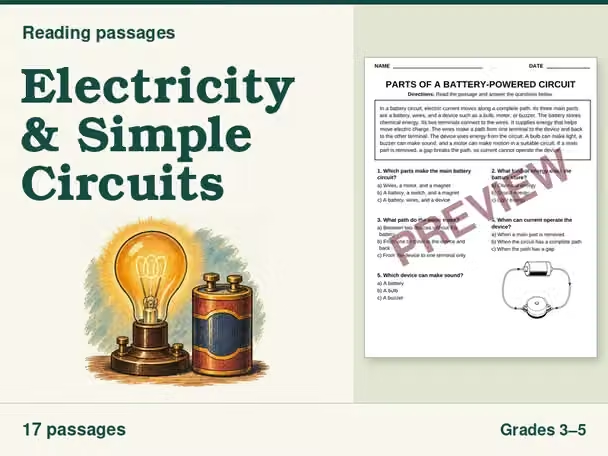
Electricity & Simple Circuits
Students read about electric charge, batteries and switches, then use evidence from the text to explain how a circuit works.
Reading comprehension$5.50
These worksheets were designed for special education students to build subject knowledge and practice comprehension in the same lesson. The core passages target a grades 3–5 reading level and can be used across grades when the text fits the reader. Students read a passage and answer five questions. An answer key is included.
See the 6 reading resources rated 5 out of 5 by TPT buyersFind run-ons, repair fragments, and explain each fix. Choose a topic from science, history, geography, or literature for printable grades 3–5 editing practice.
Use a pencil, a crayon and one six-sided die. Roll 1 to 5 to trace or write in the matching column. Roll a 6 to color one collectible. Finish a column before the mascot collects all six. Choose print for PreK–Grade 2 or cursive for Grades 2–5.
These pages were created with a coloring-page generator to give students more choices around their interests. Pick a finished printable collection, including ocean animals, outer space or dog breeds, and print the pages your students choose.
Choose a codebreaker, pattern puzzle or riddle. Students use clues to test possible answers and explain how they reached a solution. Start with the free sampler to find a fit for an early finisher, a small group or a whole-class warm-up.
Prices in U.S. dollars.
Students read about electric charge, batteries and switches, then use evidence from the text to explain how a circuit works.
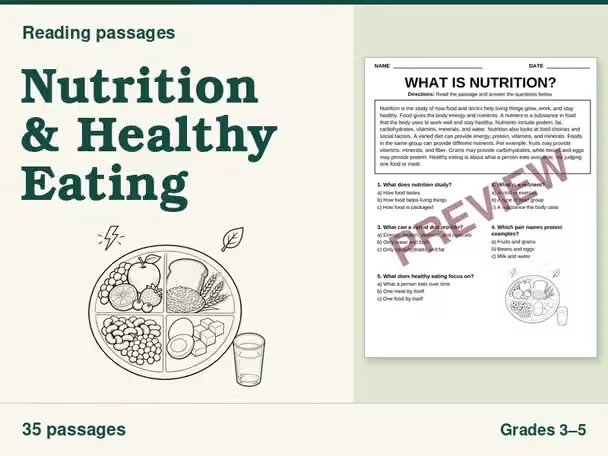
Teach nutrition, healthy eating, food groups, and nutrients while building reading comprehension with this set of 35 nonfiction passages and questions. The packet includes 175 multiple-choice questions and an answer key.
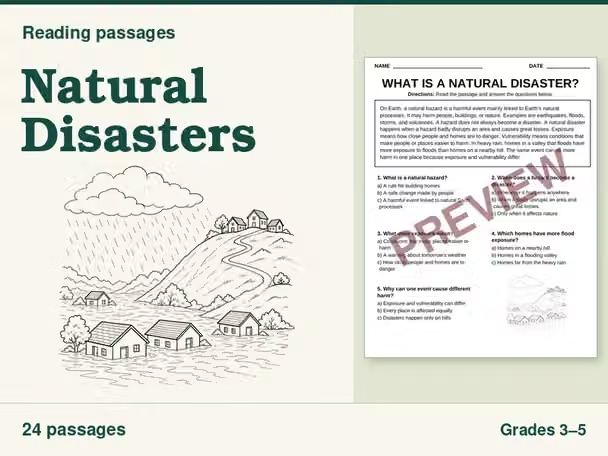
Use these Natural Disasters reading comprehension passages and questions for Earth science and geography to build subject knowledge through reading practice.
Teach states of matter while building reading comprehension with this set of 20 nonfiction science passages and questions. The packet includes 100 multiple-choice questions and an answer key.
Explore mixtures, solutions, dissolving, and methods of separating materials with 20 reading passages and 100 multiple-choice questions for Grades 3–5. Each student page pairs one passage with five questions.
Compare physical and chemical changes, identify reaction clues, and explore conservation of matter with 17 reading passages and 85 multiple-choice questions for Grades 3–5. Each student page pairs one passage with five questions.
Build science knowledge and nonfiction reading comprehension with life science, physical science, Earth and space science, health and scientific investigation across mixed grade levels 3-6.
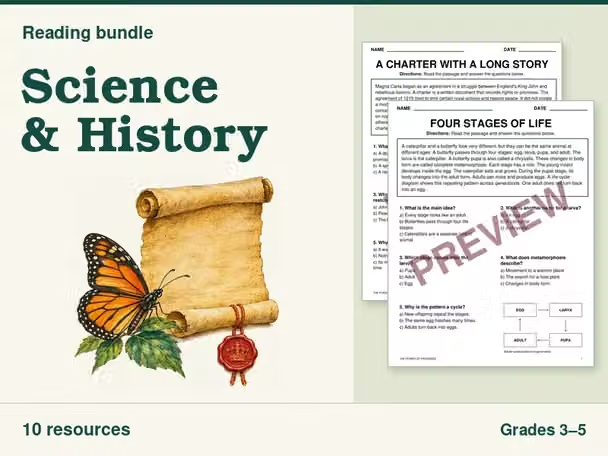
Build nonfiction reading practice across science and history with 10 topic packets, 150 passages, and 750 multiple-choice questions.
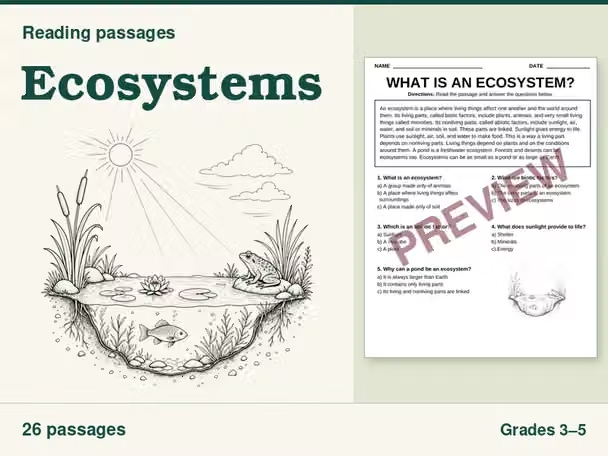
Use these Ecosystems reading comprehension passages and questions for life science to build subject knowledge through reading practice.
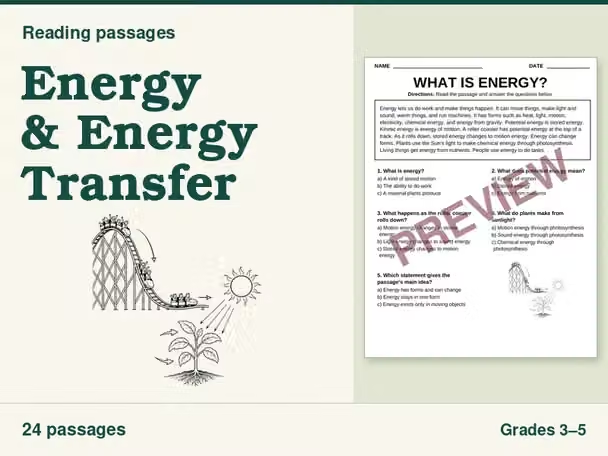
Use these Forms of Energy and Energy Transfer reading comprehension passages and questions for physical science to build subject knowledge through reading practice.
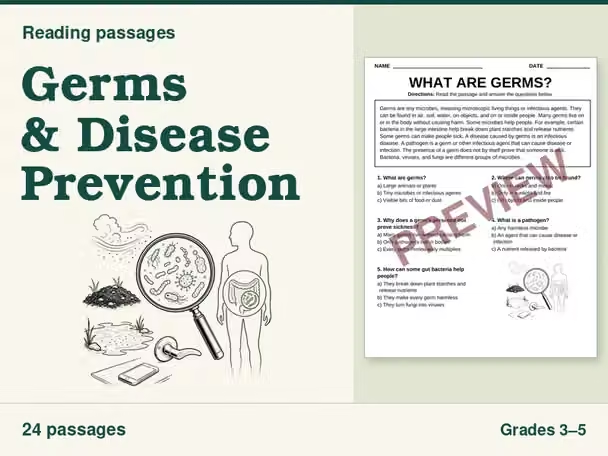
Use these Germs & Disease Prevention reading comprehension passages and questions for life science to build subject knowledge through reading practice.
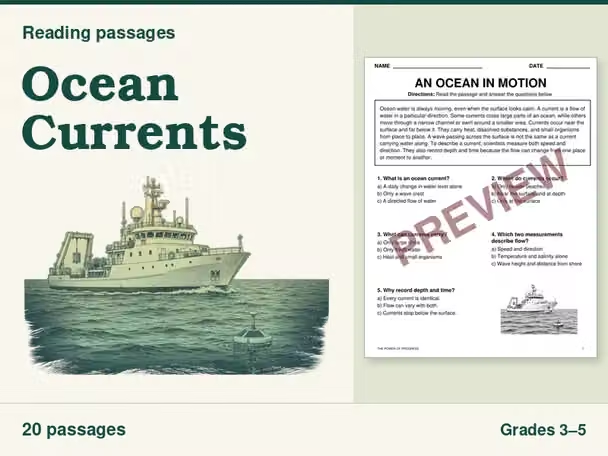
Explore the movement of ocean water with these ocean currents reading comprehension passages and questions. Students read about surface currents, gyres, temperature, salinity, density, upwelling, and the movement of heat through the ocean.
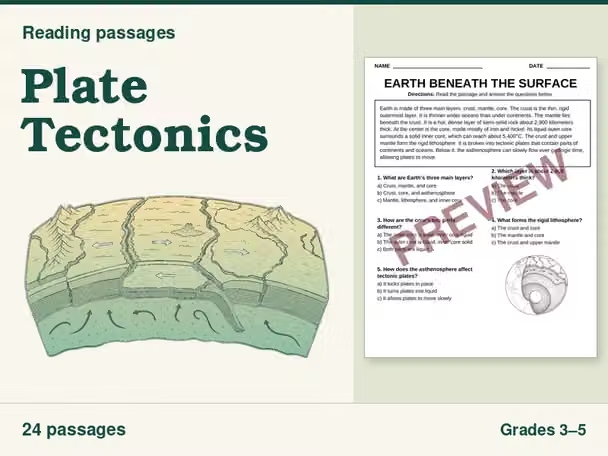
Students read “Earth Beneath the Surface” and “Solid Rock That Can Slowly Flow,” then use the passages to answer comprehension questions.
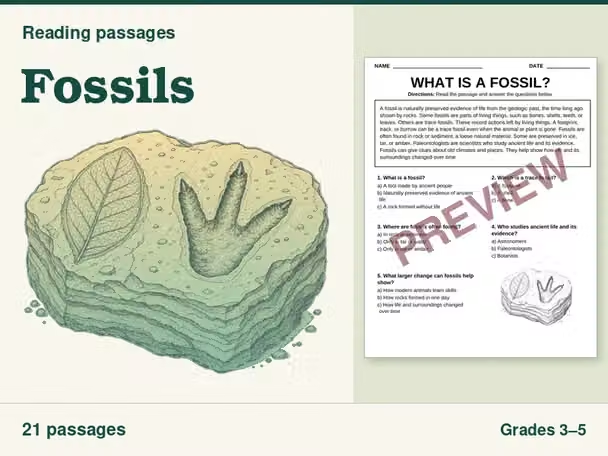
Teach fossils, paleontology, and Earth's past while building reading comprehension with this set of 21 nonfiction science passages and questions. The packet includes 105 multiple-choice questions and an answer key.
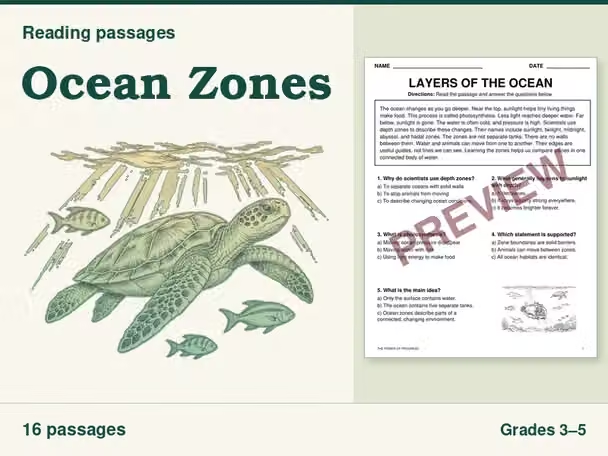
Explore ocean layers while practicing nonfiction reading with these Ocean Zones Reading Comprehension Passages and Questions.
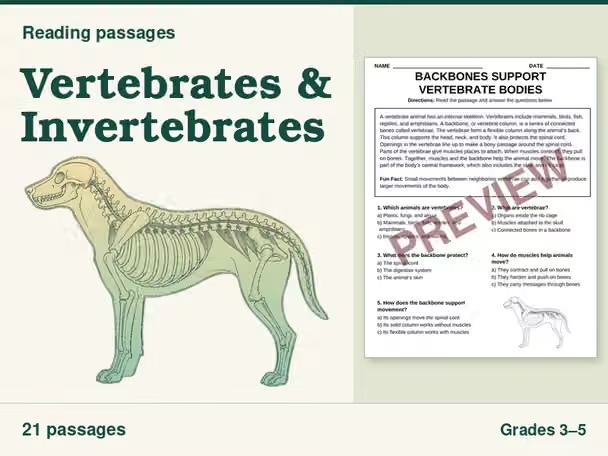
Students read “Backbones Support Vertebrate Bodies” and “Feathers Help Identify Birds,” then use the passages to answer comprehension questions.
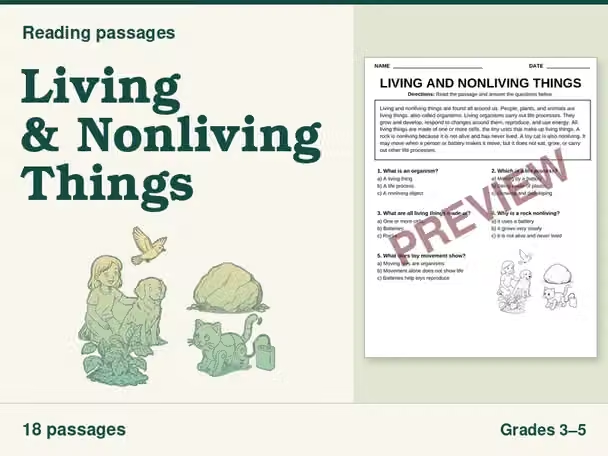
Teach living and nonliving things while building reading comprehension with this set of 18 nonfiction science passages and questions. The packet includes 90 multiple-choice questions and an answer key.
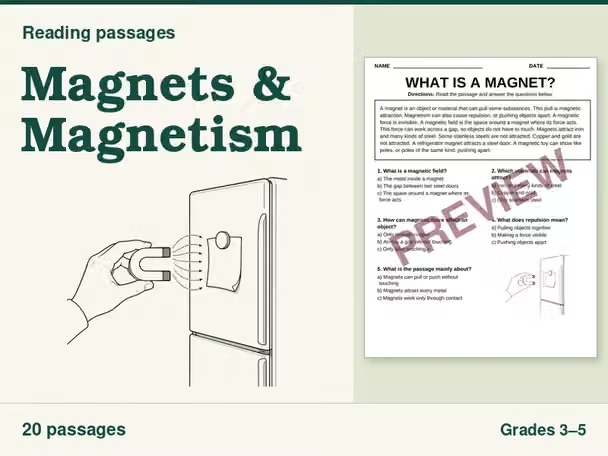
Use these Magnets & Magnetism reading comprehension passages and questions for physical science to build subject knowledge through reading practice.
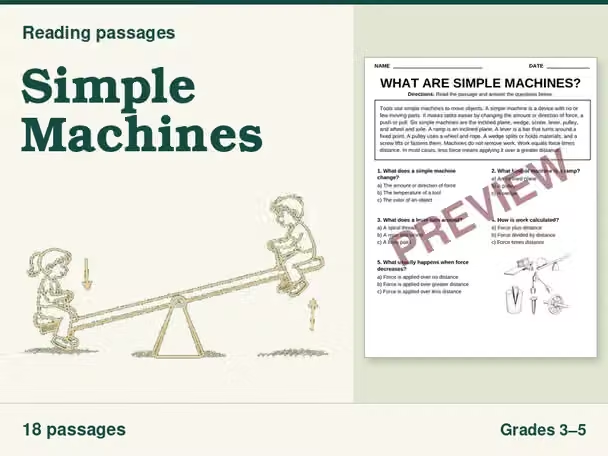
Use these Simple Machines reading comprehension passages and questions to build subject knowledge through reading practice.
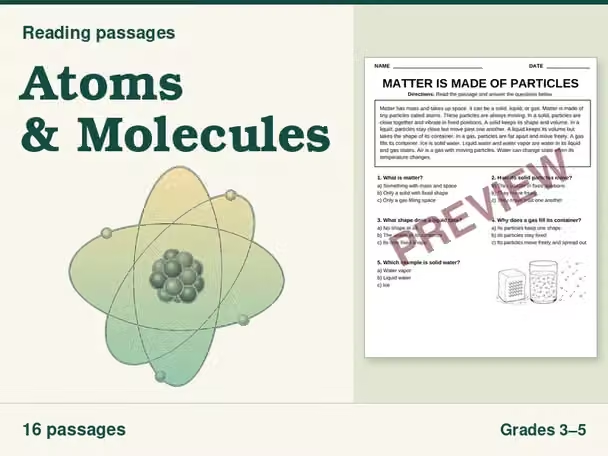
Students read “Matter Is Made of Particles” and “Electrons Around the Nucleus,” then use the passages to answer comprehension questions.
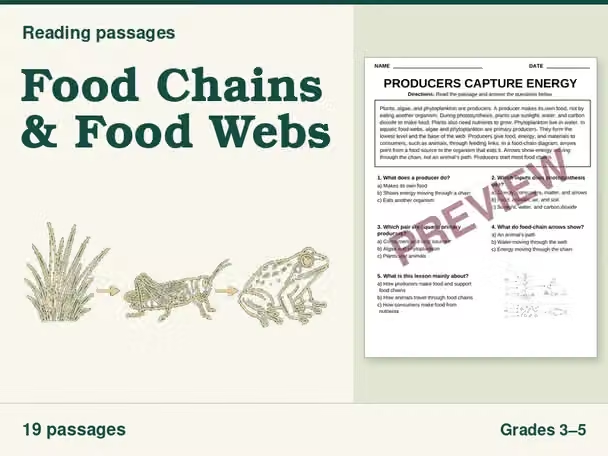
Students read “Producers Capture Energy” and “Omnivores: More Than One Food Source,” then use the passages to answer comprehension questions.
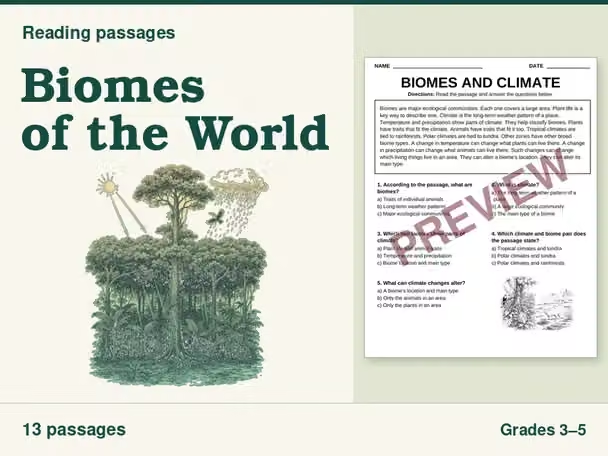
Explore world biomes with these reading comprehension passages and questions. This printable packet includes 13 informational passages, 65 multiple-choice questions, and an answer key.
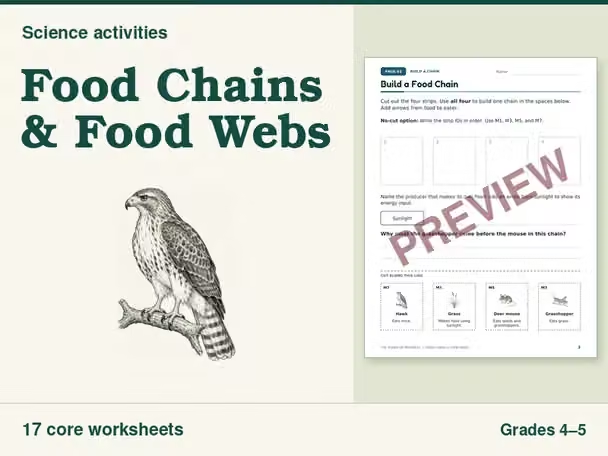
Help students understand food chains, food webs, producers, consumers, decomposers, and energy flow with these printable science worksheets and hands-on activities for 4th and 5th grade.
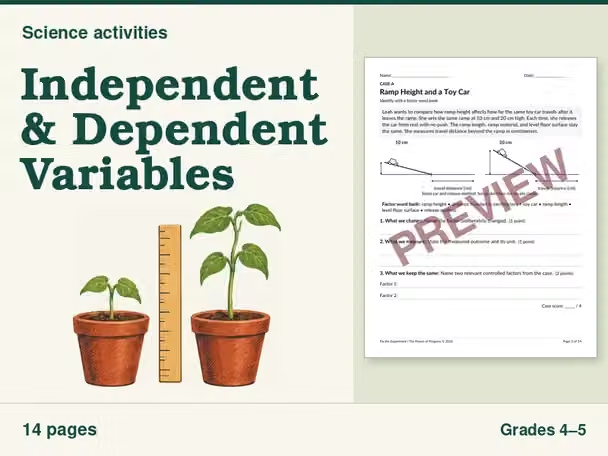
Help students move beyond simply naming variables with this Independent and Dependent Variables Activities resource.