
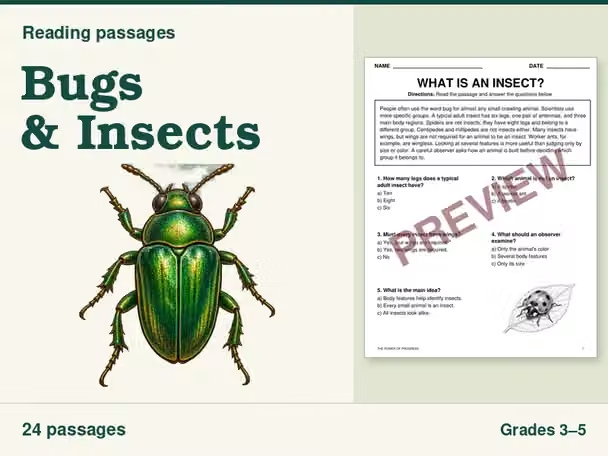
Bugs and Insects
- Reading level · Grades 3–5
- Answer key included
Single resource · Grades 3–5 · Reading comprehension · 27 pages · 24 passages · 120 questions
Connect an insects unit with nonfiction reading practice using these bugs and insects reading comprehension passages and questions. Students explore insect body parts, senses, life cycles, adaptations, and ecosystem roles across 24 short readings.
Assign available passages online with a website order. How the Reading Room works · See a sample teacher report
About this resource
Practice main idea, key details, vocabulary in context, sequence, cause and effect, and inference. Ask students to point to words or sentences that support their answers.
Use the passages to introduce insects, compare familiar groups, or support a classroom observation activity. Readings distinguish insects from other small animals and explain why scientists use the term true bugs for a specific group. These printable reading comprehension worksheets can support small groups, independent practice, reading centers, review, homework, substitute plans, or homeschool lessons.
What’s included
- 24 nonfiction reading passages
- 120 multiple-choice comprehension questions
- One passage and five questions per student worksheet
- Complete answer key
- Teacher guidance and table of contents
- Black-and-white student pages with supporting illustrations or diagrams
Also available in
Explore related resources
Worksheet preview
27 pages
Read a text excerpt
WHAT IS AN INSECT?
People often use the word bug for almost any small crawling animal. Scientists use more specific groups. A typical adult insect has six legs, one pair of antennae, and three main body regions. Spiders are not insects; they have eight legs and belong to a different group. Centipedes…