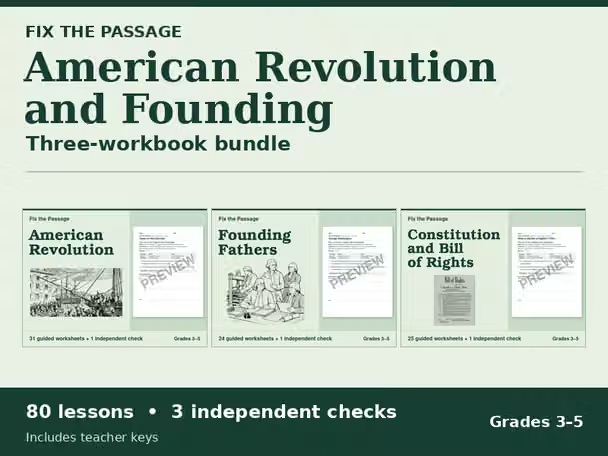
Fix the Passage | American Revolution and Founding Bundle
Follow the Revolution from independence to the Constitution and Bill of Rights.
Bundle$11
Practice fixing run-on sentences, comma splices, and sentence fragments in a subject your students know. Browse 50 printable workbooks and themed bundles by topic or lesson. Each includes guided worksheets, an independent editing check, and annotated answer keys for grades 3–5.
62 resources
These worksheets were designed for special education students to build subject knowledge and practice comprehension in the same lesson. The core passages target a grades 3–5 reading level and can be used across grades when the text fits the reader. Students read a passage and answer five questions. An answer key is included.
See the 6 reading resources rated 5 out of 5 by TPT buyersFind run-ons, repair fragments, and explain each fix. Choose a topic from science, history, geography, or literature for printable grades 3–5 editing practice.
Use a pencil, a crayon and one six-sided die. Roll 1 to 5 to trace or write in the matching column. Roll a 6 to color one collectible. Finish a column before the mascot collects all six. Choose print for PreK–Grade 2 or cursive for Grades 2–5.
These pages were created with a coloring-page generator to give students more choices around their interests. Pick a finished printable collection, including ocean animals, outer space or dog breeds, and print the pages your students choose.
Choose a codebreaker, pattern puzzle or riddle. Students use clues to test possible answers and explain how they reached a solution. Start with the free sampler to find a fit for an early finisher, a small group or a whole-class warm-up.
Prices in U.S. dollars.
Follow the Revolution from independence to the Constitution and Bill of Rights.
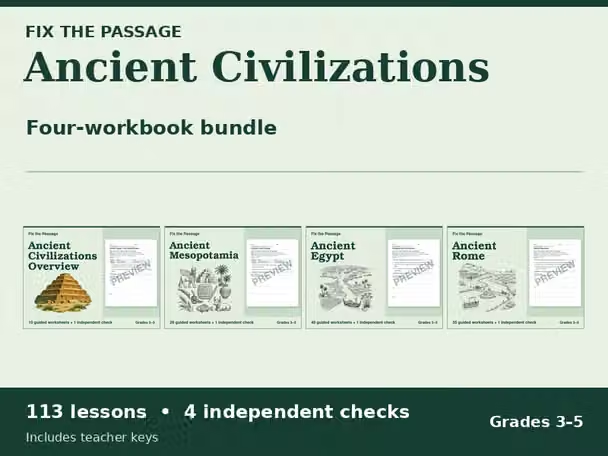
Compare ancient societies, from Mesopotamia and Egypt to Rome.
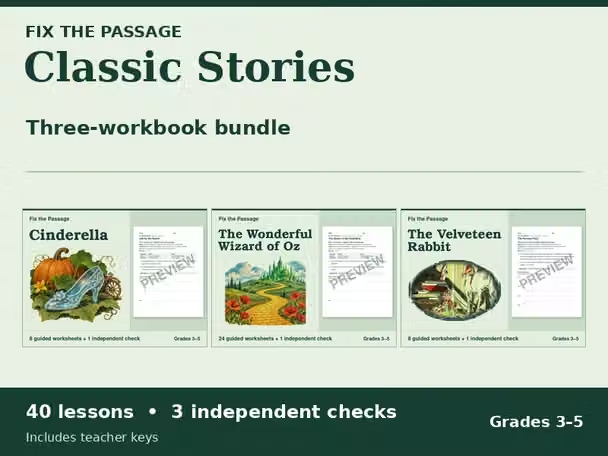
Practice sentence editing with Cinderella, the Wizard of Oz, and the Velveteen Rabbit.
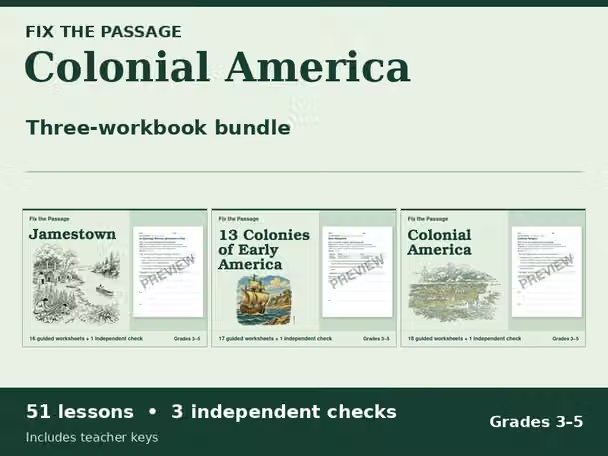
Follow the story of Jamestown and life in the thirteen colonies.
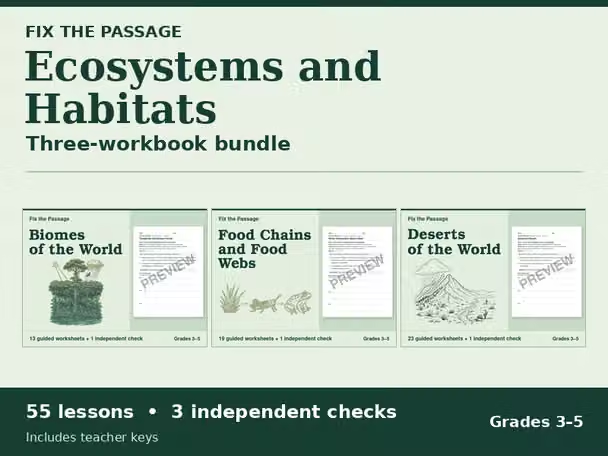
Trace food webs and explore how life fits its habitat.
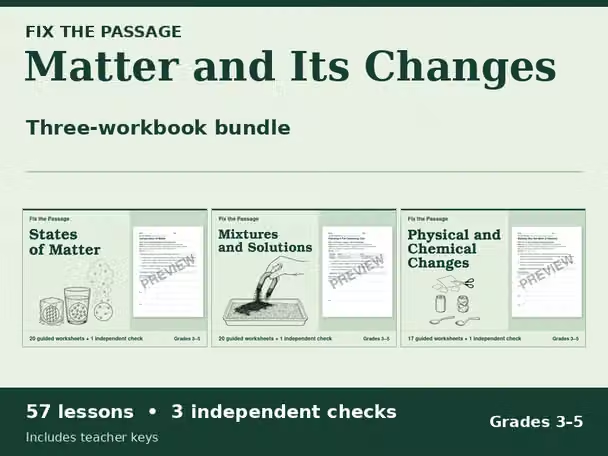
Explore solids, liquids, mixtures, and changes in matter.
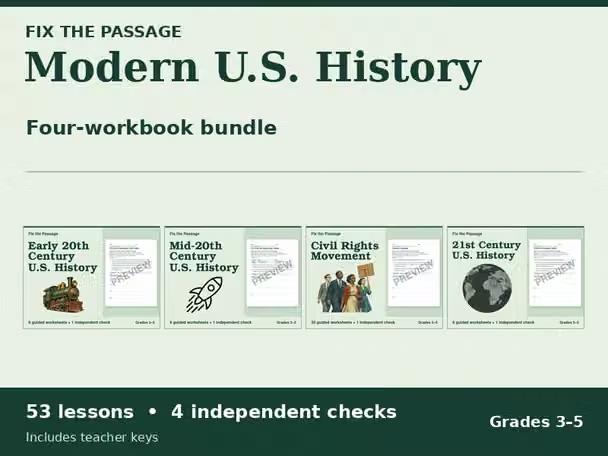
Trace events from the early twentieth century through the civil rights movement and into the twenty-first century.
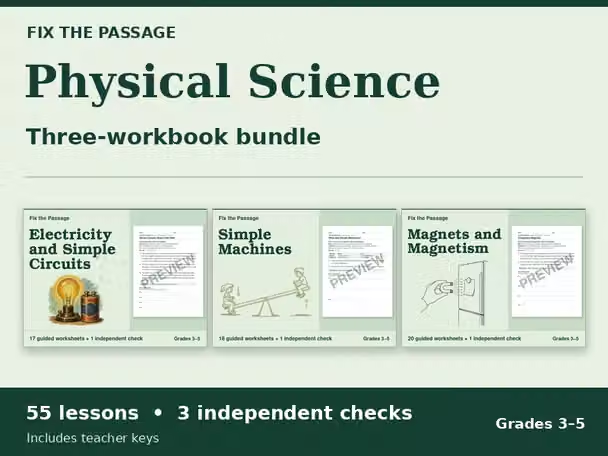
Edit run-ons and fragments while reading about circuits, magnets, and simple machines.
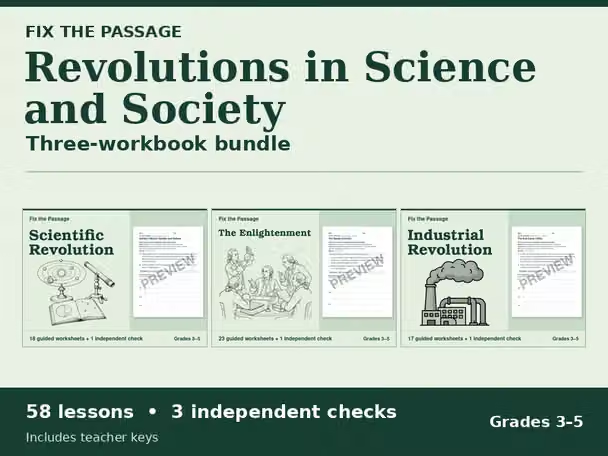
Explore how discoveries, ideas, and inventions changed society.
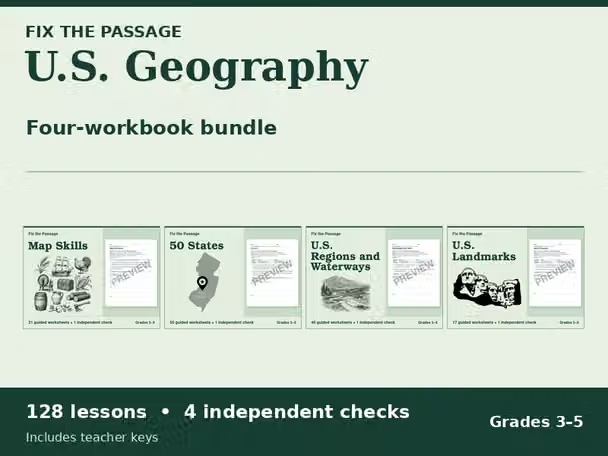
Read maps and explore states, waterways, regions, and landmarks.
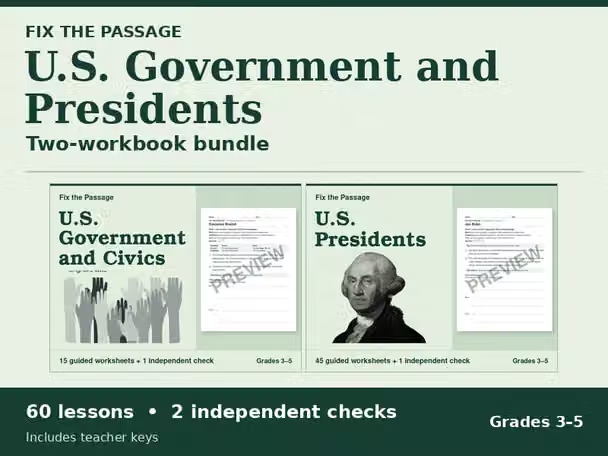
Explore how the U.S. government works and who has led it.
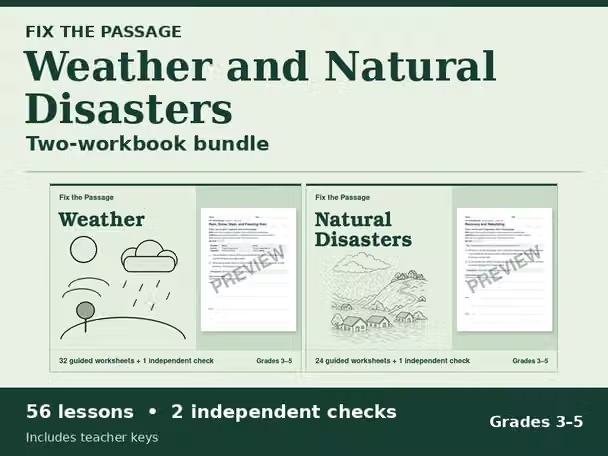
Explore weather patterns and natural hazards.
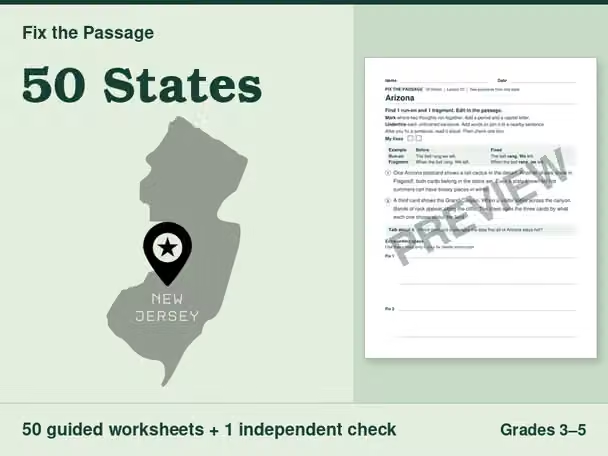
Take a state-by-state trip through grammar. Students edit a short passage about each state, from Alabama to Wyoming.
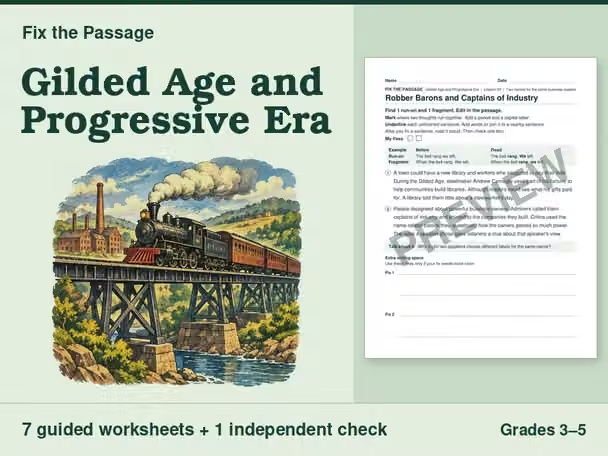
Follow the changes that shaped the United States between the transcontinental railroad and the 19th Amendment. Students repair sentences about industry, labor, and voting rights.
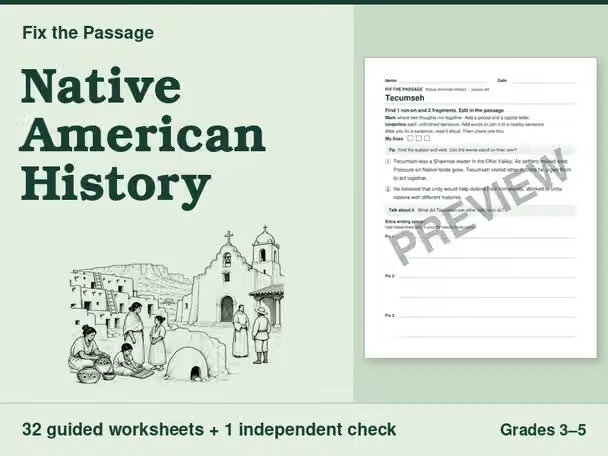
Students edit passages about Native nations, leaders, and sovereignty. Pair a lesson on Tecumseh with its reading passage, or use it on its own.
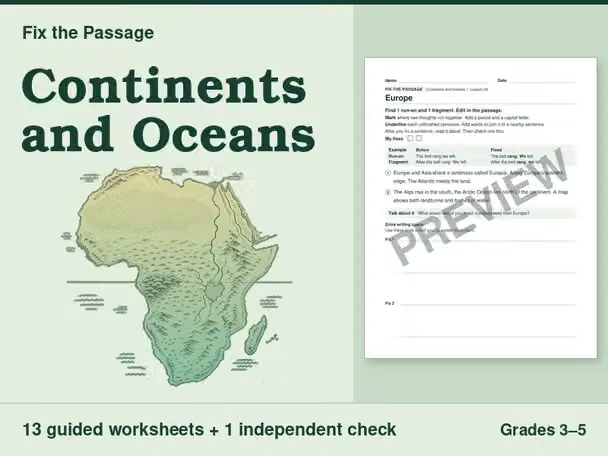
Travel across continents and oceans one paragraph at a time. Students decide where one complete thought ends and another begins as they read about places such as Europe and the Southern Ocean.
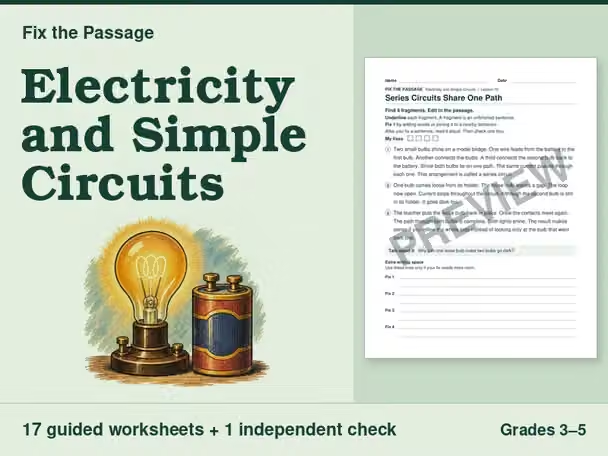
What happens inside a flashlight when the switch clicks? Students edit passages about electric current, circuit paths, and the parts that make them work.
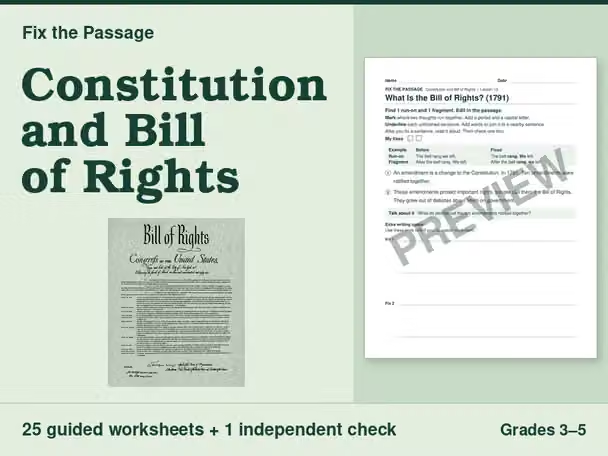
Use passages about the Articles of Confederation, the Constitution, and the Bill of Rights to practice sentence editing during a civics unit.
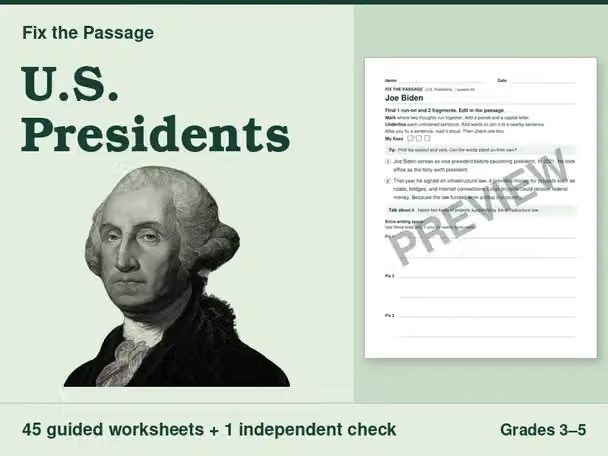
Choose a president for a day of editing practice. The lessons follow presidents from George Washington through Joe Biden.
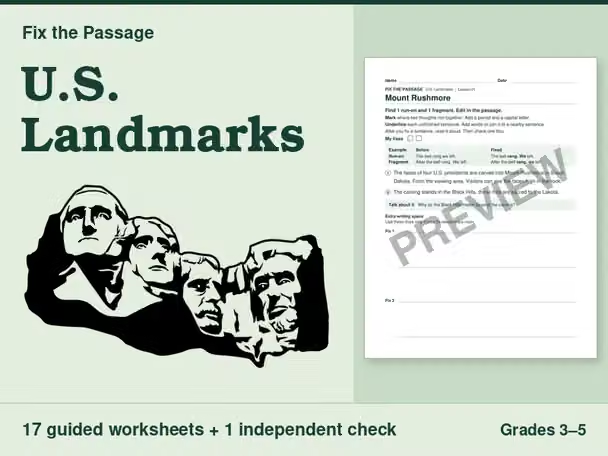
Take an editing trip from Mount Rushmore to the Hollywood Sign. Each passage gives students a landmark to learn about and sentences to repair.
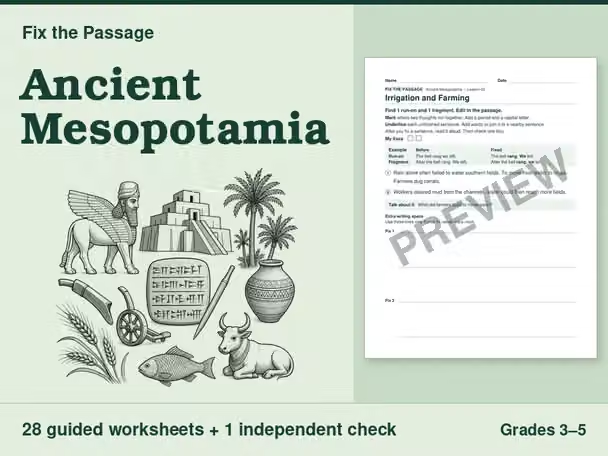
Explore Mesopotamia through short editing passages about its people, beliefs, and legacy. Students use meaning to decide how sentences fit together.
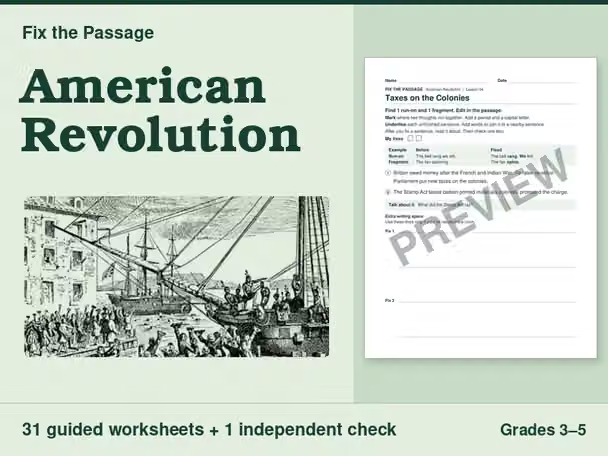
From the 13 Colonies to Common Sense, these passages give students a reason to reread the events and ideas behind the American Revolution.
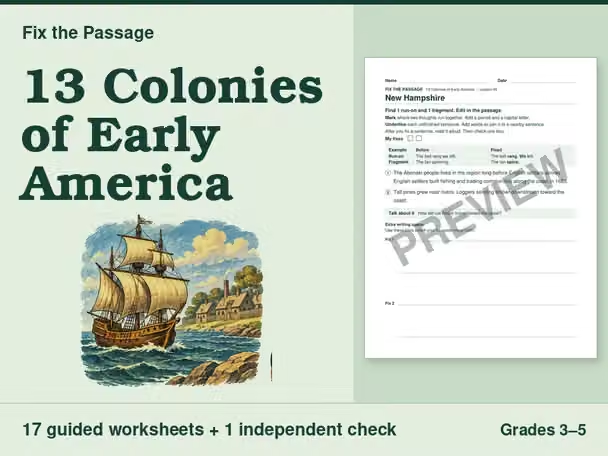
Introduce the original colonies through short passages. Students mark sentence repairs as they read about places such as New York and Georgia.
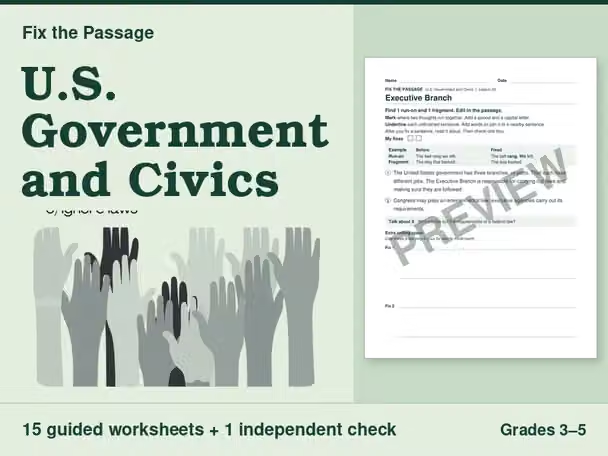
Bring grammar into a civics lesson. Students repair sentences about Congress, local government, and how government works.